



- Blog
- 7 Flatbed Cargo Trailer Features Buyers Should Never Ignore
- 8 Ways a Dropside Trailer Improves Logistics Efficiency
- What Is a Flatbed Truck? – Complete Guide for Logistics & Transport
- What Is a Dump Trailer? The Complete Guide to Types, Uses, and Choosing the Right Hauler
- Why Are Semi-Trailers Essential in Modern Logistics?
- Why do tires eat?
Categories
Recent Posts
- SEMI-TRAILER
- Side Wall Trailer
- Flatbed Trailer
- Interlink Semi Trailer
- Dump Trailer
- Lowboy Trailer
- Bulk Cement Trailer
- Container Trailer
- Tanker Trailer
- Gas Tanker Trailer
- Fence Trailer
- Aluminum Tanker
- Acid Tanker
- Stainless Steel Tanker
- BUS TRAILER
- Modular Trailer
- Reefer Trailer
- Log Trailer
- Car Carrier Trailer
- Wind Blade Trailer
- Side Curtain Trailer
- HOWO TRUCK
- DRAWBAR TRAILER
- FAW TRUCK
- SHACMAN TRUCK
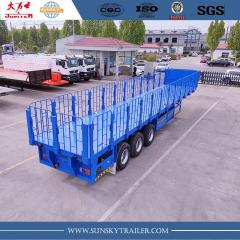
8 Ways a Dropside Trailer Improves Logistics Efficiency
In the fast-paced world of freight transport and supply chain management, operational efficiency directly dictates profit margins. Fleet managers and logistics providers are constantly searching for equipment that minimizes turnaround times, reduces labor expenses, and adapts to diverse cargo types.
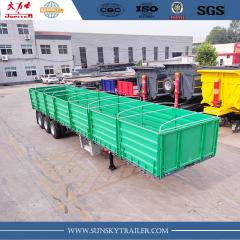
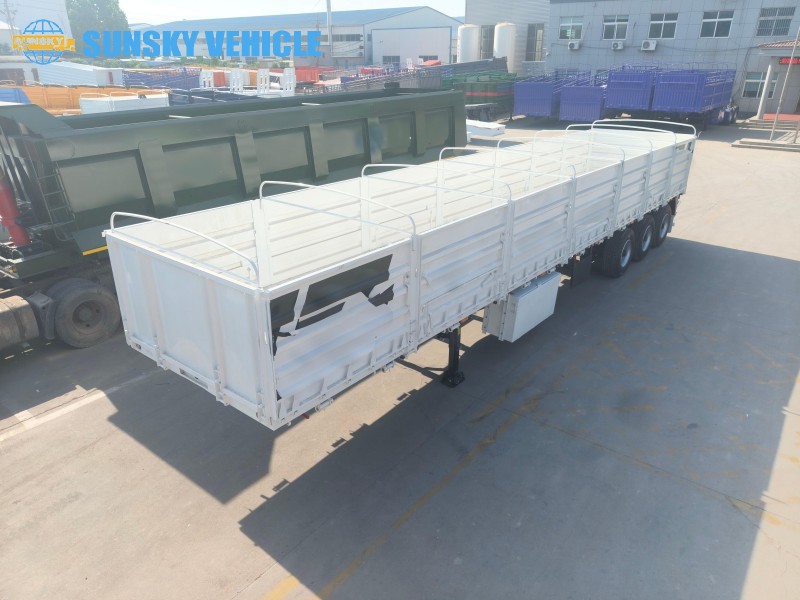
Enter the dropside trailer (also known as a side wall semi-trailer). By combining the accessibility of a flatbed with the security of a walled enclosure, dropside trailers have become a cornerstone asset for modern logistics operations.
Here are 8 proven ways a dropside trailer drastically boosts logistics efficiency and keeps your fleet ahead of the competition.
1. Accelerated Side-Loading & Unloading Times
Traditional enclosed box trailers force operators to load cargo sequentially through the rear doors—a process that creates significant bottlenecks at busy distribution centers.
With a dropside trailer, the hinged side panels fold down 180 degrees. This design allows forklift operators to access the deck directly from either side across the entire length of the trailer.
-
Time Saved: Side-access loading reduces turnaround time by up to 40% to 60% compared to standard rear-only loading.
-
Bottleneck Reduction: Multiple forklifts can load or unload different sections of the bed simultaneously.
2. Multi-Cargo Versatility (Lowering Empty Miles)
One of the largest profit drains in logistics is "deadheading"—running empty trailers on return trips. Dropside trailers mitigate this by offering unmatched cargo flexibility.
| Cargo Type | How a Dropside Trailer Handles It |
| Palletized Goods | Secured with side walls up or folded down for easy fork truck access. |
| Bulk Commodities (Gravel, Sand, Grain) | Contained securely inside the side walls without spill risks. |
| Oversized Machinery & Pipe Work | Side walls fold flat, transforming the unit into a flatbed for wide loads. |
By accommodating both bulk loose materials and palletized or over-dimensional freight, your fleet achieves higher load-fill rates and significantly fewer empty return legs.
3. Reduced Reliance on Specialized Crane Equipment
Unloading heavy, awkwardly shaped equipment on remote job sites—such as construction zones or agricultural fields—often requires expensive overhead cranes or mobile lifting gear if using standard high-sided trucks.
Because dropside walls drop flush against the chassis frame, standard forklifts, telehandlers, or tractor loaders can easily reach inside from ground level. This self-contained accessibility eliminates wait times for specialized unloading machinery.
4. Enhanced Cargo Security with Modular Enclosures
Unlike pure flatbed trailers that rely exclusively on straps and tarpaulins to contain cargo, dropside trailers provide physical steel or aluminum barrier walls.
-
Lateral Protection: Prevents shifting items from sliding off during sharp turns or sudden braking.
-
Modular Drop-Sides: Many modern dropside models feature removable or collapsible posts, allowing operators to customize the height of the enclosure based on payload volume.
-
Tarp Integration: Integrated hooks along the drop-side panels make securing weather-resistant tarps fast and ergonomic.
5. Optimized Fleet Space Utilization
Time spent rearranging cargo to fit cramped dimensions is wasted money. Dropside trailers optimize bed area utilization because freight doesn't need to fit tightly through a fixed doorway frame.
Couplers, tie-down points, and lashing rings are integrated directly into the side rails. Logistics dispatchers can plan maximum cube-out and weigh-out configurations with confidence, knowing ground crews can easily reach every square foot of the bed surface.
6. Lower Maintenance Costs & Downtime
Complex hydraulic tailgates, roller shutters, and curtain-side tracking mechanisms are subject to high wear and tear, leading to frequent maintenance shop visits.
Dropside trailers feature a straightforward mechanical design: robust hinges, heavy-duty latching pins, and reinforced steel posts.
-
Fewer Moving Parts: Less risk of mechanical failure during critical delivery windows.
-
Durable Construction: Built with high-tensile steel frame structures designed to endure harsh construction environments and heavy weather exposure.
7. Improved Worker Ergonomics & On-Site Safety
Driver retention and workforce safety are critical operational metrics in modern supply chains. Manually hauling heavy loads to the rear edge of a closed trailer creates ergonomics risks and increases on-site injury potential.
Dropside trailers streamline physical handling:
-
Operators operate at waist-level to release side catches.
-
Lower side barriers reduce unnecessary overhead reaching or awkward manual lifting.
-
Clear line-of-sight from all sides reduces forklift collision hazards during loading maneuvers.
8. Superior Performance in Urban & Tight Job Sites
Urban delivery zones and rural construction sites frequently lack formal loading docks. Navigating a large rear-loading trailer into tight spaces can severely delay schedules.
A dropside trailer allows parallel side-loading along curb edges, narrow driveways, or street-side unloading zones. Drivers do not need to back directly into a dock frame—they can simply pull up alongside the unloading zone, drop the side walls, and complete the delivery efficiently.
Dropside Trailer vs. Standard Alternatives: Quick Comparison
| Feature | Dropside Trailer | Standard Flatbed | Closed Box Trailer |
| Side Loading Ability | Excellent (Full Access) | Excellent | None |
| Loose Material Containment | High (Built-in Walls) | Poor (Requires Racks) | High |
| Turnaround Speed | Fastest | Moderate | Slowest |
| Versatility Score | 9/10 | 7/10 | 5/10 |
Frequently Asked Questions (FAQ)
What is a dropside trailer?
A dropside trailer is a commercial transport vehicle equipped with side panels and a tailgate hinged at the bottom. These walls can be dropped down or completely detached to allow fast 360-degree loading and unloading via forklifts.
How does a dropside trailer differ from a curtainside trailer?
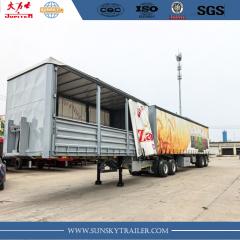
While curtainside trailers use flexible PVC curtains over a rigid frame to protect goods from weather, dropside trailers feature rigid metallic side walls (steel or aluminum) that provide physical containment for loose, heavy, or bulk cargo.
Are dropside trailers suitable for heavy construction materials?
Yes. Dropside trailers are widely used in construction, agriculture, and mining industries due to their ability to carry heavy equipment, structural steel, piping, sand, and precast concrete blocks securely.
Conclusion: Upgrade Your Logistics Efficiency
In a industry where hours saved translate directly into increased profitability, the dropside trailer stands out as an indispensable tool. By reducing loading cycle times, eliminating empty return runs, and ensuring cargo safety across diverse industries, investing in quality dropside trailers can significantly improve your fleet's overall return on investment (ROI).